Accurate window measurements are a critical factor for ensuring the proper function of window joinery. A window that is either too small or too large can lead to issues such as drafts and leaks. If you’re wondering how to properly measure a window, it’s worth considering whether to do it yourself or hire a professional.
When to Measure Windows
Measurements should primarily be taken after the completion of the shell construction phase to ensure the window openings align with the architectural plans. This guarantees that the ordered windows will fit perfectly into the reveals. It’s equally important to take measurements before replacing old joinery, and before purchasing window coverings like external roller shutters or facade blinds. Precise measurements ensure that these elements are functional, aesthetically pleasing, and comfortable to use.
How to Take an Initial Measurement Yourself
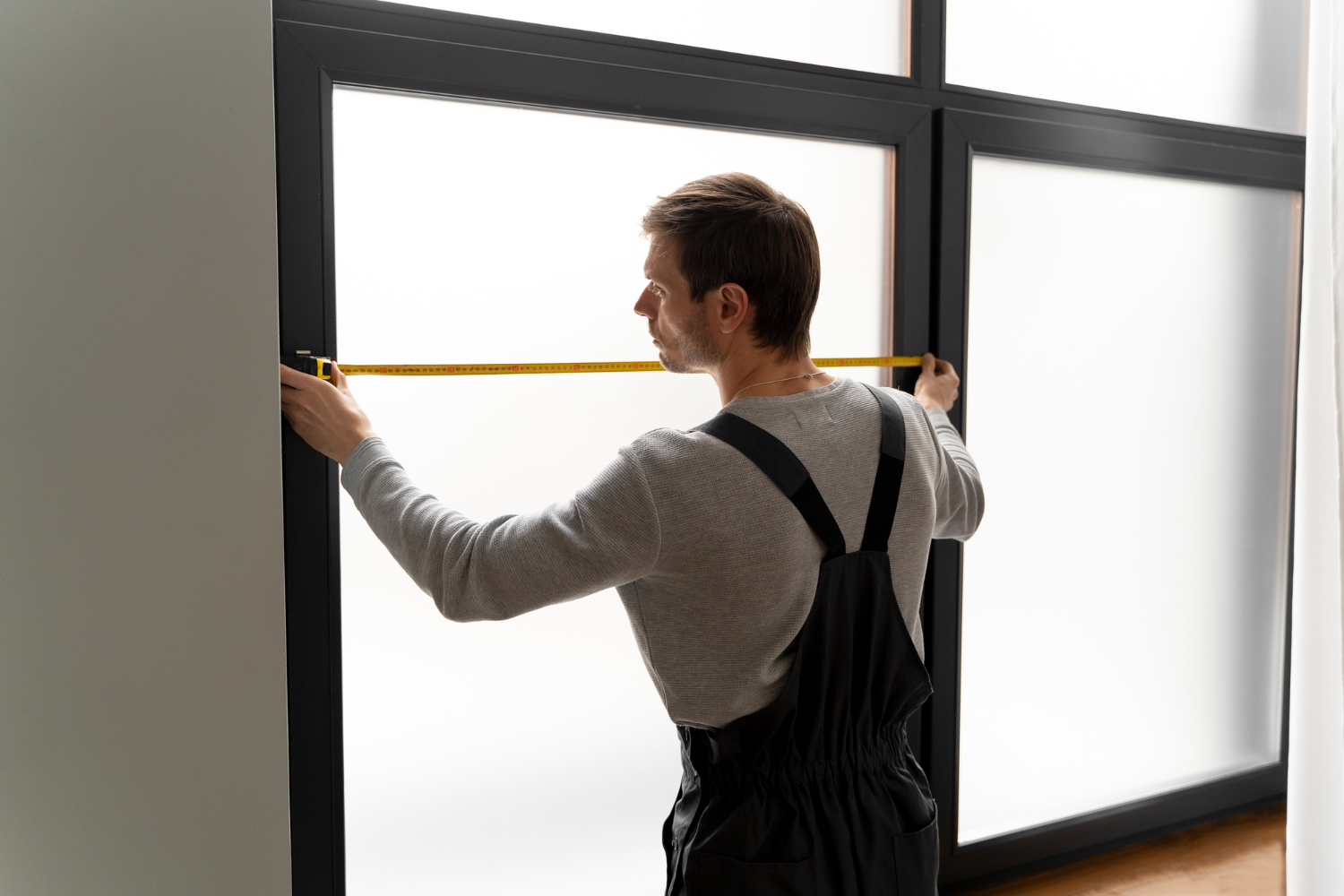
You can perform an initial window measurement on your own. Remember to measure each opening from wall to wall, both vertically and horizontally. In addition to the dimensions, you should also note the number of sashes or panes, the intended use of the joinery, and the material of the windows (PVC or aluminum).
Window Opening Types and Measurement Methods
When taking measurements, you need to pay attention to the type of window openings. Two types are common in construction:
- Rebated (or Canted) reveals
- Non-rebated reveals
In older buildings, the primary purpose of a rebate was to limit frost penetration and provide some protection for wooden windows. Today, rebates are created with the facade, overlapping the window frame to improve the aesthetic of the facade and reduce thermal bridging.
In a non-rebated system, the size of the opening is the same from both the inside and the outside, making the measurement process simpler. In this case, the external dimension of the opening is slightly smaller than the internal one.
Including Sills in Your Measurement
The internal sill should be flush with the bottom edge of the frame. The sill itself has no thermal function; insulation is provided by the warm substructure, which is a minimum of 3 cm high and is installed at the bottom of the window. The substructure seals the window, provides thermal insulation, and creates a space for the sills. Therefore, in new construction, the bottom of the window opening should be reduced by at least 4 cm (3 cm for the substructure + 1 cm for leveling and foam).
Measuring Window Sashes and Panes
Measuring sashes or panes is not as simple as it might seem. For sashes, in addition to the dimensions, you need to know the profile type, the hardware used, and the height of the handle. For panes, the height and width are important, as is the thickness of the glazing unit. Window pane replacement is a 1:1 process, without any extra installation tolerance.
How to Measure a Window Reveal
When measuring the reveal, it’s best to take measurements in several places and then compare the results and use the smallest one. The width should be reduced by about 3 cm, and the height by 6 cm (3 cm for the substructure + 1.5 cm for foam at the top and bottom). In practice, measurements should be taken from a “zero point” (datum) to ensure the dimensions are accurate to the actual conditions, as reveals can “float,” causing variations in installation clearances.
- For old wooden windows, you can’t measure them “based on the old joinery.” You must measure the rebates from the outside and increase the dimension so that the frame is hidden behind the rebates (usually 4-5 cm on each side, if the reveal allows). The height of the window should be measured so that it only overlaps the rebate at the top, and the bottom rests on the external sill.
- For old PVC windows, there are three solutions:
- Slightly reduce the window size to avoid the need for chiseling.
- Keep the same dimensions if there’s enough space for sealing.
- Keep the dimensions but chisel out the reveals from the inside.
Consequences of an Incorrect Measurement
An incorrect window measurement can lead to many problems, such as:
- Installation difficulties
- Leaks
- Thermal bridging
- Higher heating costs